Wednesday, July 21, 2010

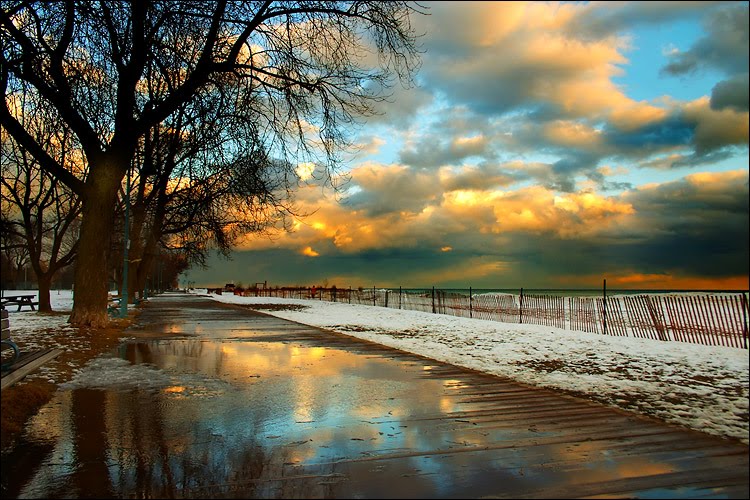
Port Maitland Beach


Stunning in beauty
Fine sand
Summer sun
Walk a mile
and back again

Shifting tableaux
of high clouds and azure sky
or fog on the horizon

Here the ocean
becomes Fundy Bay
Restless waves
or resting, silent sea

Comb the beach
Build a castle
Bring a chair
Read a book
Luxuriate
Fall Asleep

But – note to self:
Don’t go in the water!
40 degrees F?
5 degrees C?
Dunno --
But you’re cold in an instant
Numb in a minute!

Tuesday, July 20, 2010

The Night

I’ve played music a long long time
Collected hundreds of memories
over 56 years

Precious memories
Funny ones
Good friendships
If there are painful memories
I’ve forgotten them already

This is a big big memory:
A milestone
My first foursome
One night only
First year of college
Coffee house
Jesus people
Darkness
Candles maybe

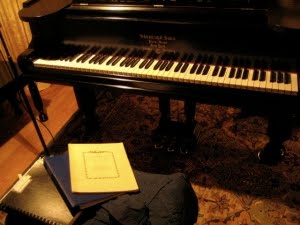
Steinway grand,
Finest keys I ever played
Seemed 20 feet long in the darkness

One Don on bass
Improvising, harmonic, inventive

Another Don drumming
Intuitive, clever, a natural

Doug on Hagstrom guitar
Listening, riffing, complementing

Never before had I played with four
Weren’t we all stunned?
Weren’t we all transfixed?

It felt like magic
It sounded like heaven
or its musical equivalent

Wow!
A door was opened
And we all walked through it
never to return

A beautiful musical moment
A connection
The only night ever
with that particular foursome
The Night.

Monday, July 19, 2010

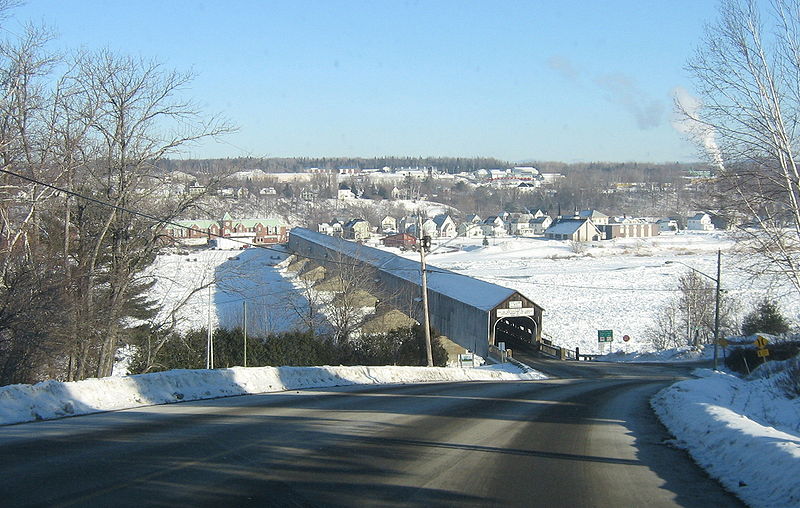
Hartland: New Brunswick's Smallest Town


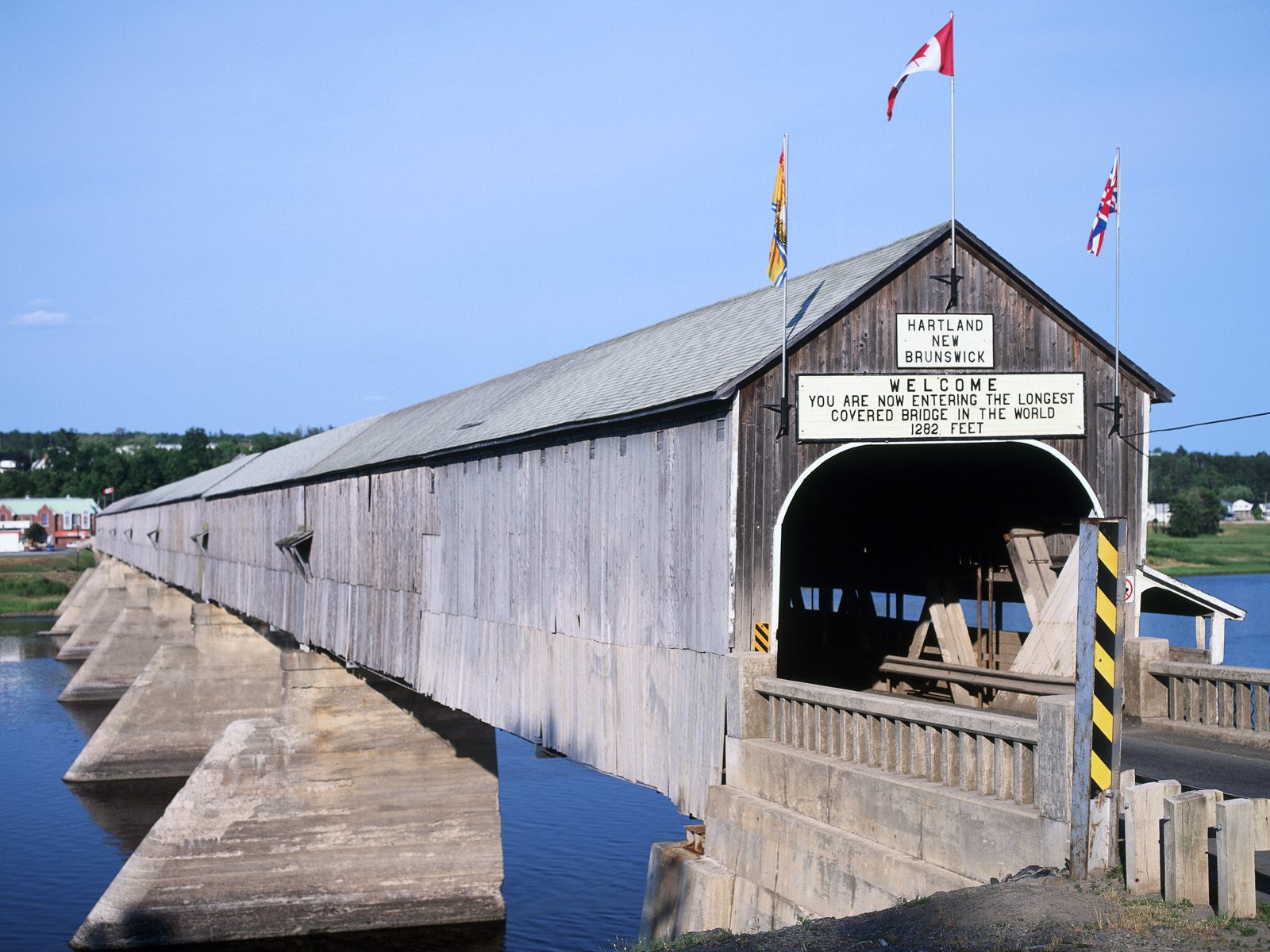
It has the longest covered bridge in the world --
twelve hundred and eighty-two feet (390.75 metres)
          of pine and spruce.

The bridge was built across the Saint John River in 1901
          with major improvements in 1921 and 1945.

You can walk across this “wonder”
            on its covered pedestrian walkway.

As a child, we traveled to Hartland
            to visit Arthur and Hazel,
                        my great uncle and aunt.
They lived across the street
            from Hatfield’s potato chip factory,
                        and we bought large brown bags
                                    full of warm, freshly-made chips.

Hartland is located in Carleton County,
            about 10 miles from the USA border,
                        in New Brunswick’s potato-growing region.

Only 1000 people live there,
            but Hartland was home
                        to two recent New Brunswick premiers:
                                    Hugh John Fleming (1952-1960)
                                                and Richard Hatfield (1970-1987).

Weirdly, two American congressmen
            were also born in Hartland:
Isaac Stephenson (Wisconsin, 1883-1889)
            and Samuel Stephenson (Michigan, 1889-1897).

The town website is here.

Friday, July 16, 2010

Capped!


 After 86 days of continuous catastrophe,
the hole at the bottom of the sea has been capped.

Oil is not leaking into the Gulf of Mexico
from the Deepwater Horizon location.

Much more remains to be done,
but, at least temporarily, the flow is stopped.

An estimated 689 million liters of oil have flowed into the gulf,
killing wildlife,
damaging the ecosystem
and destroying the livelihoods
of thousands of people.

Thank God!

Perhaps this is the beginning of the end
of this man-made disaster.

Thursday, July 15, 2010

Springhill Mine Disaster


U2 sang about it on their Joshua Tree tour.

The coal mines in Springhill, Nova Scotia
were the site of three mining disasters.

In 1891, a fire killed 125 miners and injured many more.
            The scale of this disaster was unprecedented 
                        in Canadian history.

In 1956, an explosion killed 39 men 
            more than a mile underground.
                        88 miners were rescued by the heroic work
                                   of draegermen and barefaced miners.

In 1958, a bump (collapsing mineshaft) killed 74 men.
            100 miners were rescued,
                        some of them as late as eight days after the bump.

This last disaster received worldwide attention
            in those early days of television newscasts,
                        and resulted in the mine being permanently closed.

Watch old CBC news clips here.

At least two books were written about the 1958 disaster.

The ballad was written by Peggy Seeger and Ewan MacColl,
            who sang it as an a cappella duet. (see the lyrics below)
                        Peter, Paul and Mary later sang the song.
                                    And the Dubliners after them.


“The Ballad of Springhill”
(Peggy Seeger & Ewan MacColl)

In the town of Springhill, Nova Scotia
Down in the dark of the Cumberland Mine
There's blood on the coal and the miners lie
In the roads that never saw sun nor sky. (x2)

In the town of Springhill, you don't sleep easy
Often the earth will tremble and roar
When the earth is restless, miners die
Bone and blood is the price of coal. (x2)

In the town of Springhill, Nova Scotia
Late in the year of fifty-eight
Day still comes and the sun still shines
(But it's) Dark as the grave in the Cumberland mine. (x2)

Down at the coal face, miners working
Rattle of the belt and the cutter's blade
Rumble of the rock and the walls closed round
(The) Living and the dead men two miles down. (x2)

Twelve men lay two miles from the pitshaft
Twelve men lay in the dark and sang
Long hot days in the miners tomb
(It was) Three feet high and a hundred long. (x2)

Three days past and the lamps gave out
And Caleb Rushton got up and and said
There’s no more water, or light, or bread
(So we'll) Live on song and hope instead. (x2)

Listen for the shouts of the barefaced miners
Listen thru the rubble for a rescue team
Six hundred feet of coal and slag
Hope imprisoned in a three foot seam. (x2)

Eight days passes and some were rescued
Leaving the dead to lie alone
Thru all their lives they dug their grave
Two miles of earth for a marking stone. (x2)

Wednesday, July 14, 2010

Meditation

on Psalm 19:7-11
The law of the LORD is perfect, converting the soul:
the testimony of the LORD is sure, making wise the simple.
The statutes of the LORD are right, rejoicing the heart:
the commandment of the LORD is pure, enlightening the eyes.
The fear of the LORD is clean, enduring for ever:
the judgments of the LORD are true and righteous altogether.
More to be desired are they than gold, yea, than much fine gold:
sweeter also than honey and the honeycomb.
Moreover by them is thy servant warned:
and in keeping of them there is great reward.

The law of the LORD is perfect,
converting the soul (Psalm 19:7)

your law, your word, is perfect
fully what you intend it to be
flawless in its nature and quality
true in its essence and totality
correct in its statements
right in its judgement
pure in its motivation

your testimony is sure,
and it affects us when we read it
it touches us when we hear it
it changes us when we meditate on it,
chewing and swallowing and digesting.
it nourishes us
and inevitably it changes us
our souls are converted
we are altered at your altar

what do we need?
we don’t even know
but there is a longing for you
a desire to move with you
to resonate with the tones you’ve produced
to partner with you in the dance
to be with you, in you
to be a part of you
a yearning, an aching sometimes

more to be desired than gold
more to be enjoyed than rubies
sweeter than honey
better than raspberries with ice cream
how good you are!
and I want to love you more
how good is your word,
and I want to love it more!

Monday, July 12, 2010

Acadians


I’m one-sixteenth Acadien.
Acadians are descendents of French colonists
who settled in Atlantic Canada and Maine
in the 17th century.

These hardy pioneers fished and farmed
and mostly got along well
with the First Nations tribes
who already lived in the region –
the Mi’kmaq and Wolastoqiyik
(formerly Micmac and Maliseet).
There was considerable intermarriage.

The French colony of Acadie (Acadia)
comprised the Canadian provinces
of New Brunswick, Nova Scotia
and Prince Edward Island.

Most of this region was given to Britain
by the Treaty of Utrecht (1713).

The tragic events known collectively
as the Expulsion of the Acadians
occurred from 1755-1763.
The British authorities forced 14,000 Acadians
to leave the region, and many perished.
Longfellow’s poem Evangeline is based on this event.

Some of the survivors traveled to Louisiana
and became known as Cajuns.
Other exiles eventually returned,
most to New Brunswick,
where about 325,000 Acadians now live.

Almost all Acadians now speak both French and English.
Acadian culture is rich in history, music and folklore.

Every five years (beginning in 1994),
the Congrès Mondial Acadien
(Acadian World Congress)
meets to celebrate Acadian culture
and address issues relating to Acadian identity.
(In 1999 the congress was held in south Louisiana,
but all other years it has been held
in various locations in eastern Canada.)

Read much more at Wikipedia under the headings:
Acadia
Acadians
Expulsion of the Acadians
Duke William